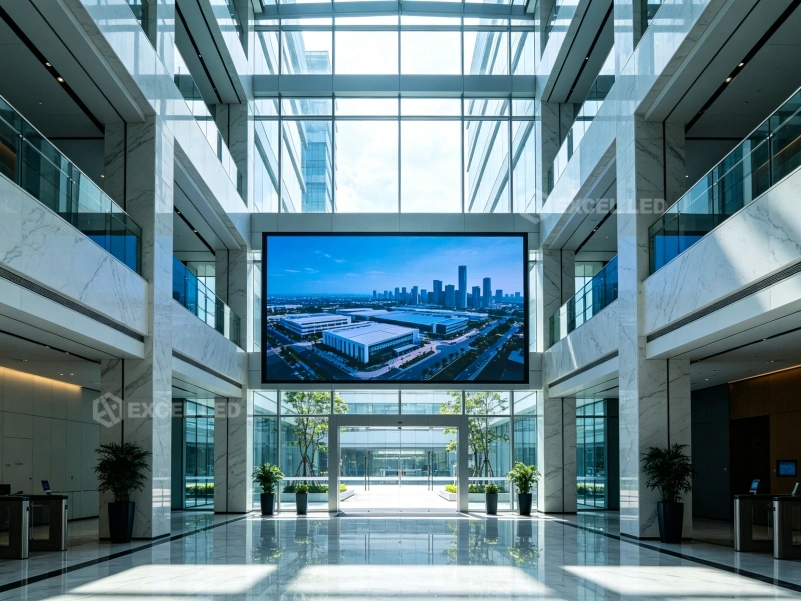
P2.5 Indoor LED Display | Professional 2.5mm Commercial Video Wall
A precision 2.5mm pixel pitch delivering flawless HD for 2.5m+ viewing distances. 100% front-serviceable, 3840Hz high-refresh, and ultimate commercial ROI.
What is a P2.5 Indoor LED Display?
A P2.5 indoor LED display is a high-resolution commercial video wall where the distance between the center of each LED pixel (the pixel pitch) is exactly 2.5 millimeters. This specific configuration packs an impressive 160,000 pixels per square meter (dots/m²).
In the commercial AV industry, P2.5 is widely recognized as the “universal standard” for medium-to-large indoor installations. Based on the fundamental rule of pixel pitch, it guarantees seamless, grain-free visual clarity for any audience seated or standing at an optimal viewing distance of 2.5 meters (8.2 feet) or further. It delivers the perfect equilibrium between stunning HD performance and large-scale project cost-efficiency.
The Pixel Pitch Decision: P2.0 vs P2.5 vs P3.0
P2.5 Resolution Cheat Sheet: How Big Should Your Wall Be?
Unlike LCD TVs, LED video walls are custom-built. To achieve standard broadcasting resolutions (like 1080P or 4K) without stretching your video content, you must match the P2.5 physical pitch with the correct wall dimensions. Use our engineering cheat sheet below:
| Target Resolution (Format) | Required Screen Dimensions (W × H) | Estimated Area | Typical Application |
| HD 720p (1280 × 720) | 3.2m × 1.8m (10.5ft × 5.9ft) | ~ 5.76 m² | Retail Window Displays, Medium Meeting Rooms |
| FHD 1080p (1920 × 1080) | 4.8m × 2.7m (15.7ft × 8.8ft) | ~ 12.96 m² | Corporate Lobby Main Screens, Church Stages |
| 4K UHD (3840 × 2160) | 9.6m × 5.4m (31.5ft × 17.7ft) | ~ 51.84 m² | Shopping Mall Atriums, Landmark Advertising |
Do you have a specific wall size that doesn’t fit these standard resolutions? Don’t worry, our advanced video processors can scale your content flawlessly. If you need help calculating the exact pixel count for your unique space, read our expert guide: How to Calculate Indoor LED Display Pixel Pitch & Resolution.
Why Choose Our P2.5 LED Wall?
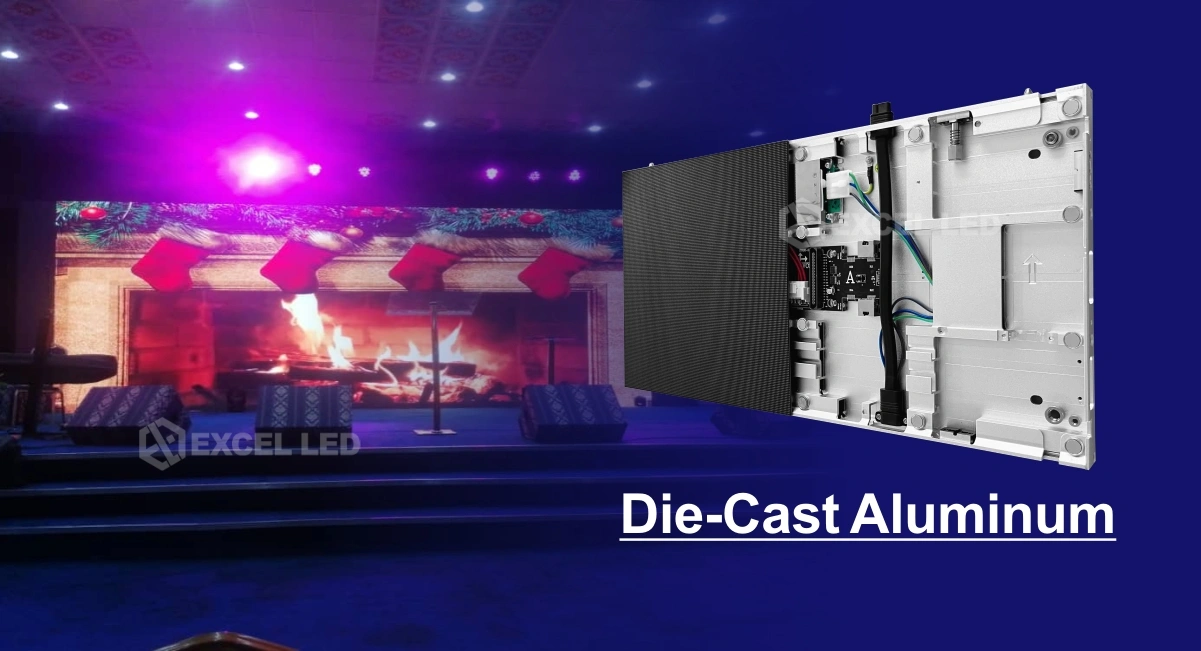
Precision Die-Cast Aluminum Cabinets
When building massive 50m² screens for malls or churches, cabinet deformation is a nightmare. EXCEL LED’s P2.5 series utilizes high-precision CNC die-cast aluminum chassis. This ensures zero-tolerance alignment and a perfectly flat, seamless video wall, preventing the “wavy” effect common in cheaper sheet-metal displays.
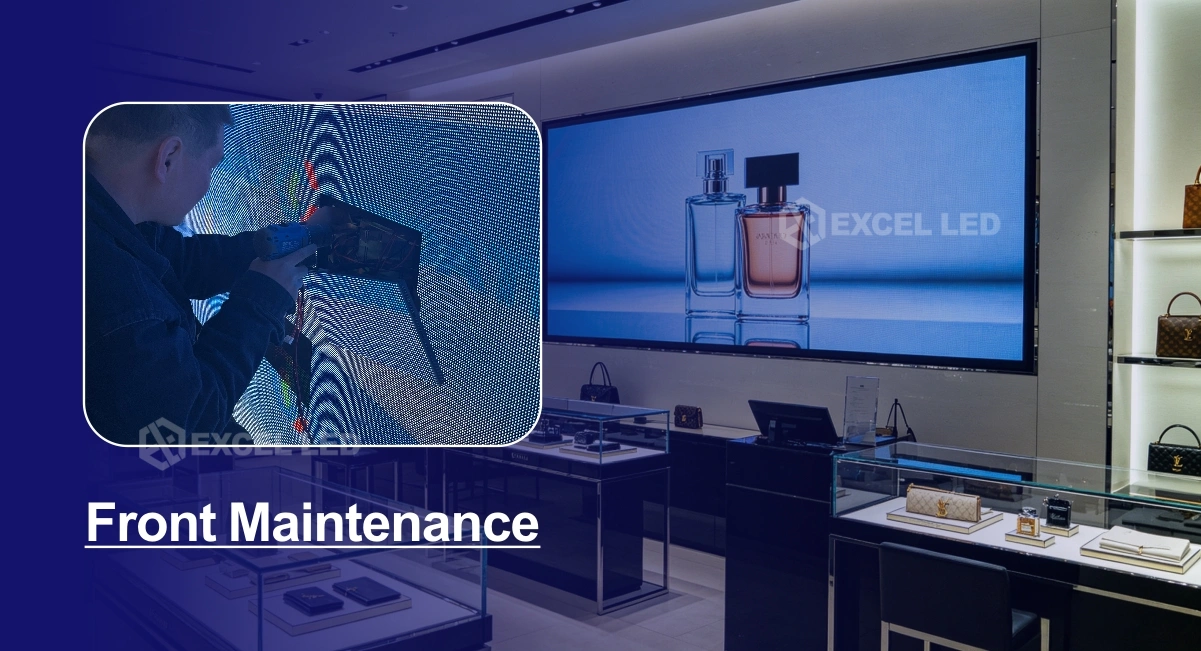
100% Front-Service Architecture
EXCEL LED’s P2.5 displays require zero rear maintenance clearance. Every LED module, power supply, and receiving card can be swapped from the front using a magnetic tool in seconds, allowing the screen to be mounted completely flush against any structural wall.
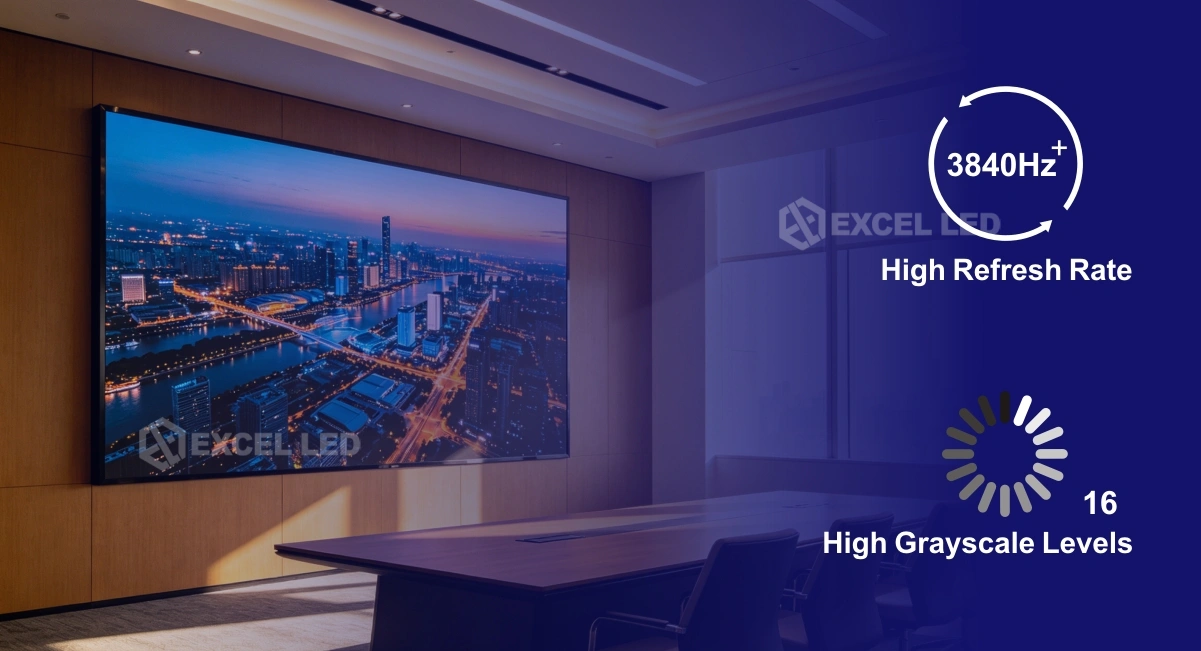
3840Hz Broadcast-Grade Refresh Rate
Whether you are live-streaming a church sermon or recording a corporate event, screen flicker ruins the footage. Engineered with premium PWM driver ICs, our P2.5 achieves a 3840Hz refresh rate, ensuring smooth, scanline-free performance on any smartphone or professional camera.
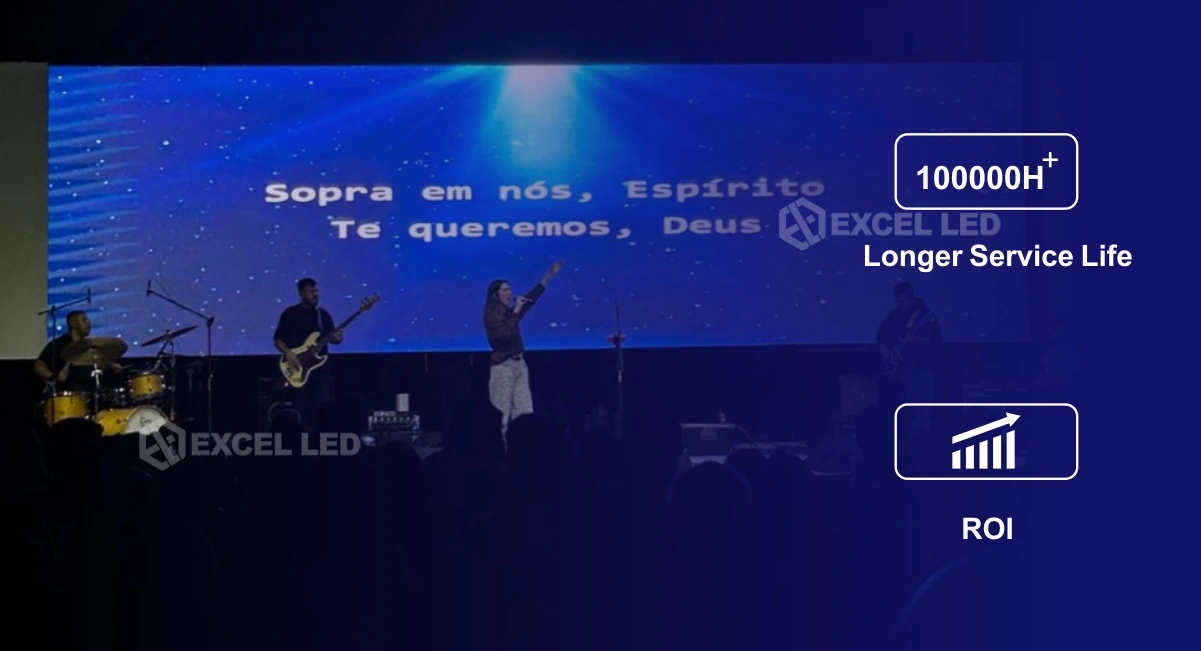
Unbeatable Commercial ROI
EXCEL LED optimized the power efficiency and thermal dissipation of the P2.5 series to reduce your daily operational costs. With a lifespan exceeding 100,000 hours and ultra-low failure rates, it provides the lowest Total Cost of Ownership (TCO) for large-scale permanent installations.
Explore Our P2.5 Indoor LED Display Series
Before diving into specific P2.5 products, you are welcome to visit our Homepage to see the full range of display technologies we offer, from outdoor solutions to creative rental screens.
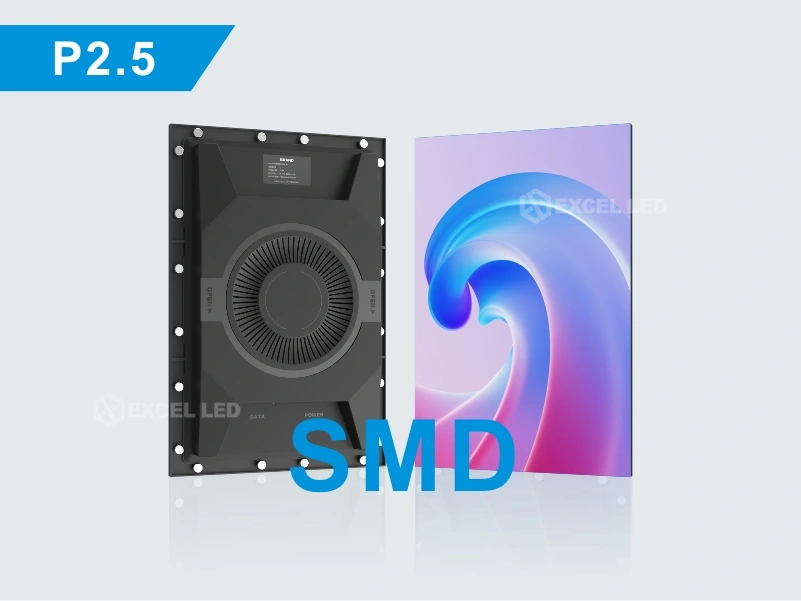
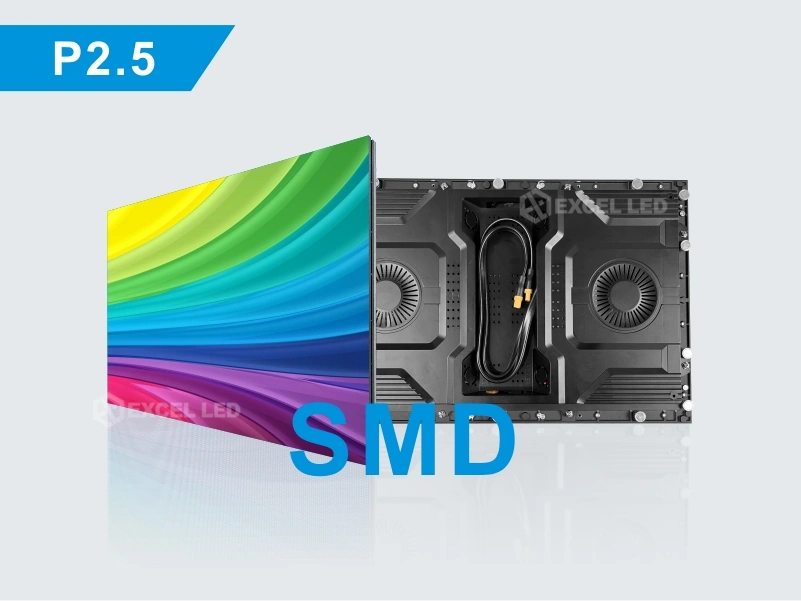
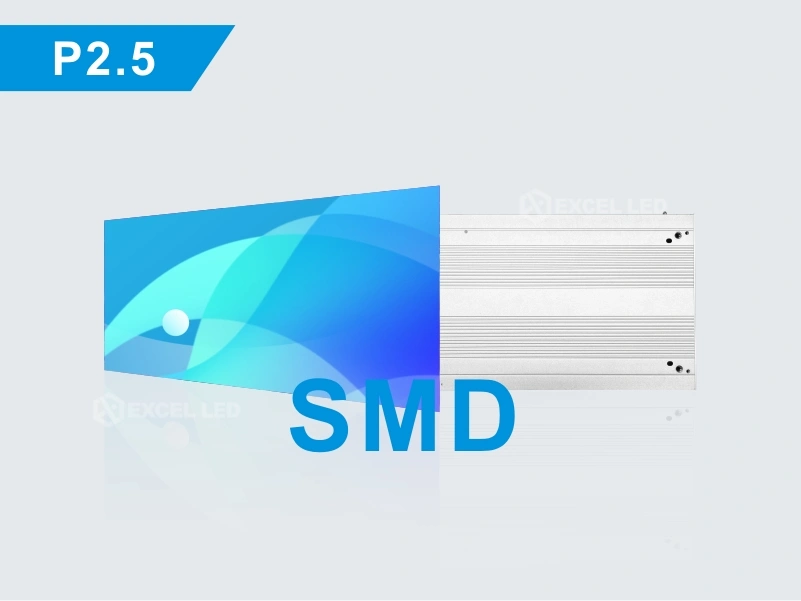
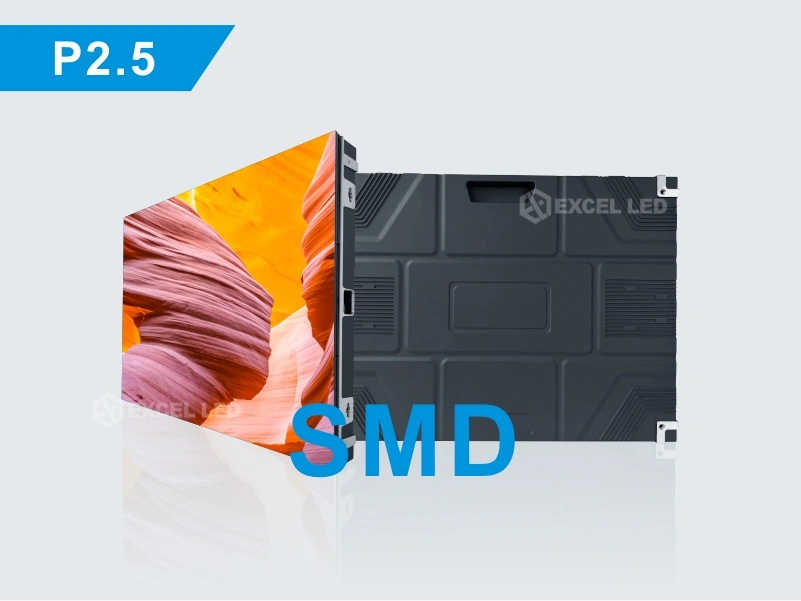
P2.5 SMD Series
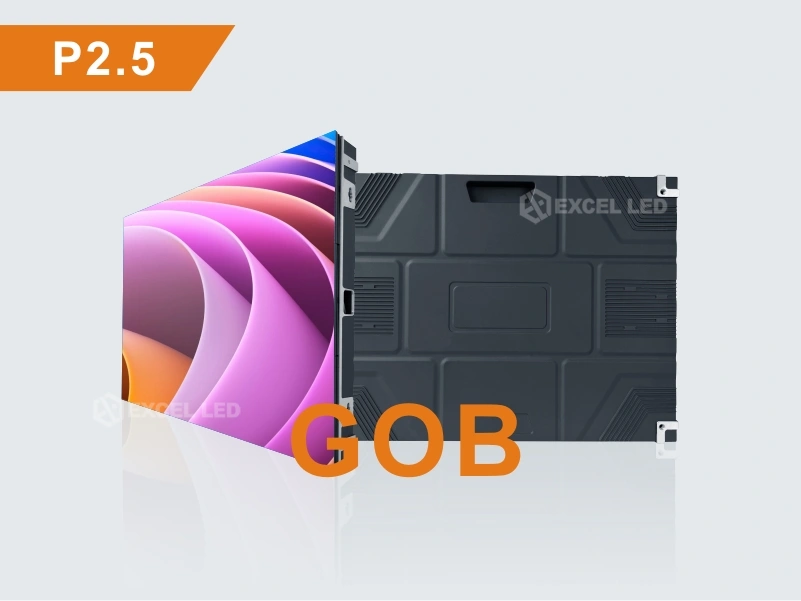
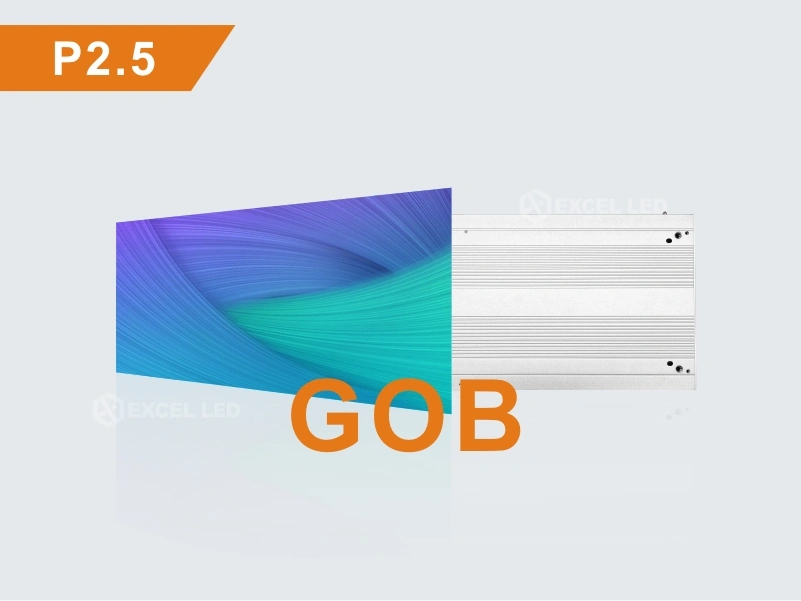
P2.5 GOB Series
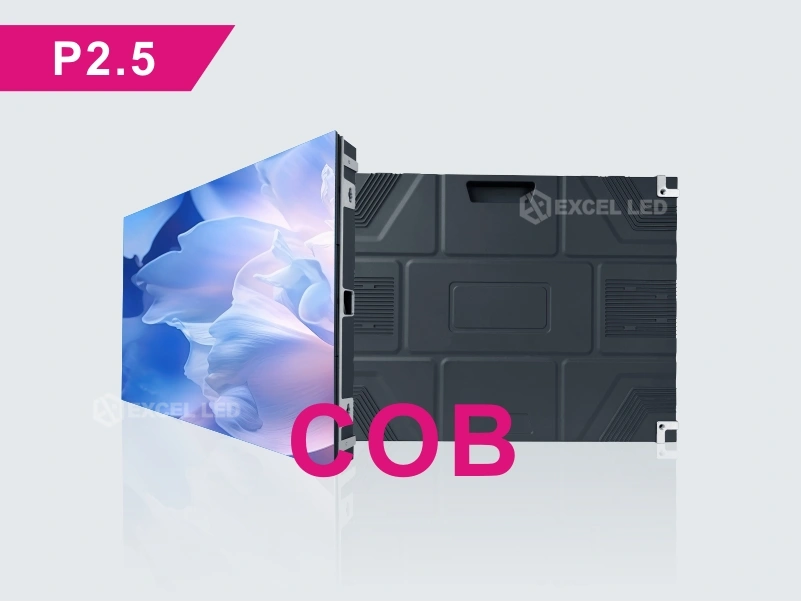
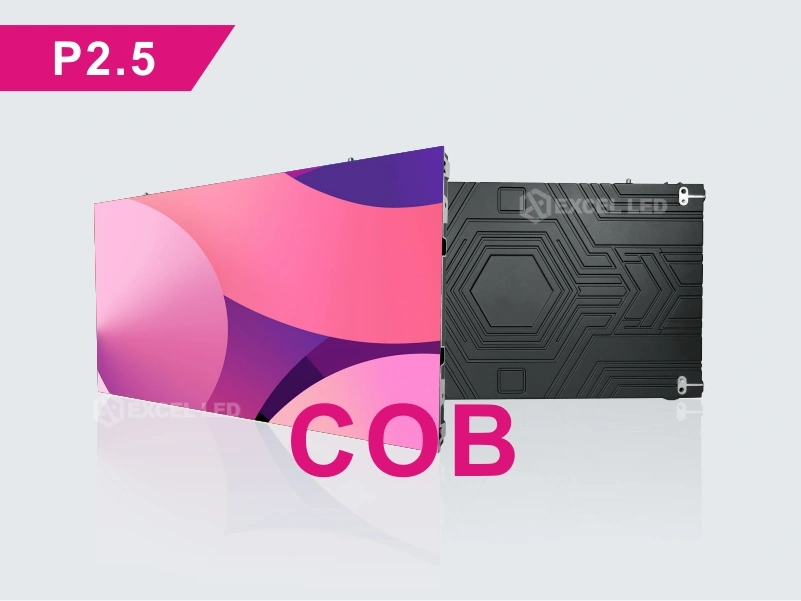
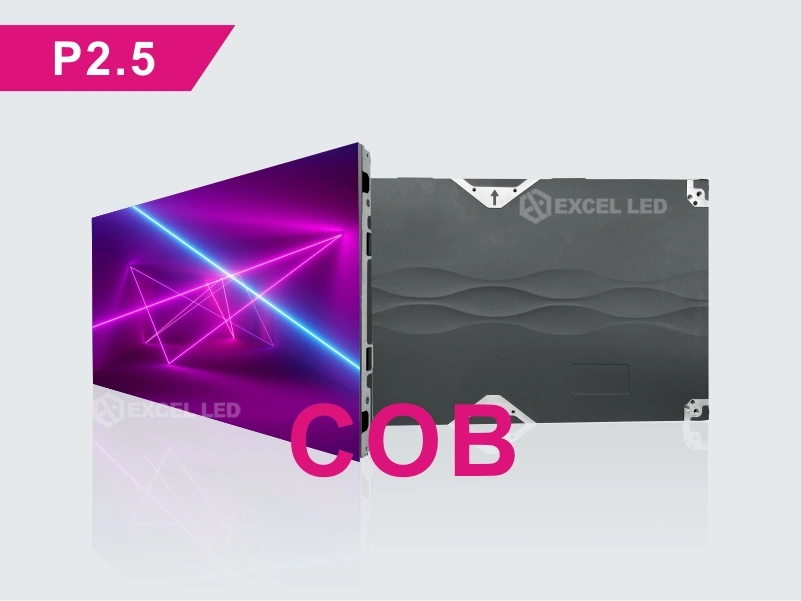
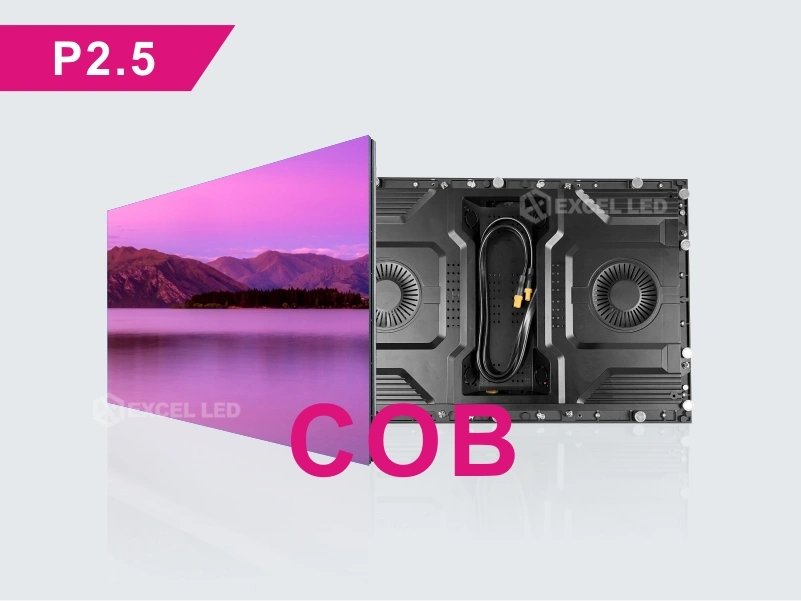
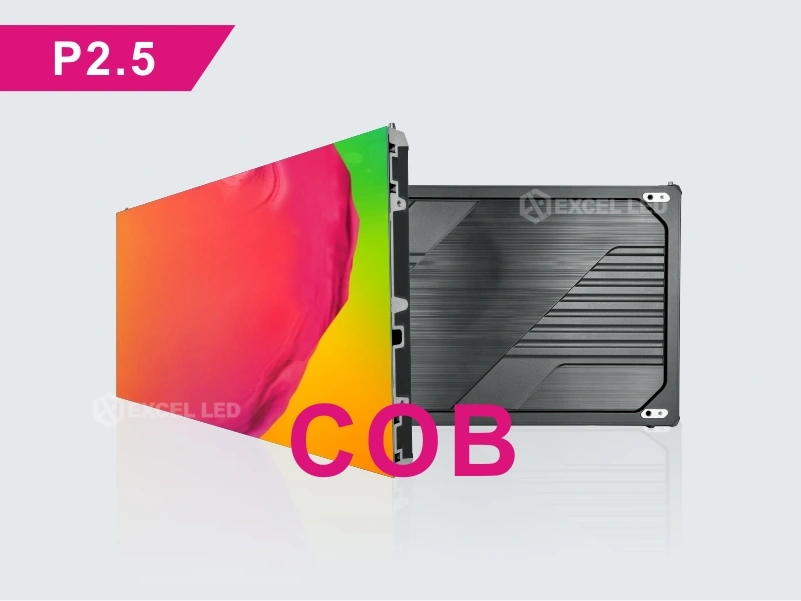
P2.5 COB Series
Technical Specifications for P2.5 Indoor LED Display
| Key Parameters | Specifications & Options | Engineering Advantage |
| Pixel Pitch | 2.5 mm (160,000 dots/m²) | Industry-standard commercial HD density. |
| Encapsulation Tech | SMD (Value) / GOB (Protected) / COB (Premium) | Choose based on your ROI and environment. |
| Module Dimensions | 320 x 160 mm / 250 x 250 mm | Flexible sizing for 16:9 or 1:1 screen ratios. |
| Cabinet Material | High-Precision Die-Cast Aluminum | Ensures 0.1mm alignment tolerance for large walls. |
| Refresh Rate | 3840Hz – 7680Hz (Configurable) | Broadcast-grade stability for all camera types. |
| Brightness | 600 – 1000 nits (Adjustable) | High-contrast visuals under bright mall lighting. |
| Gray Scale | 14 – 16 Bit | Seamless color gradients without contouring. |
| Service Access | 100% Magnetic Front Service | Zero-clearance wall-mounting for space saving. |
Contact Us
Have LED projects? Please feel free to contact us at any time, we will respond to you in 24 hours.
Proven Success: Global P2.5 LED Projects
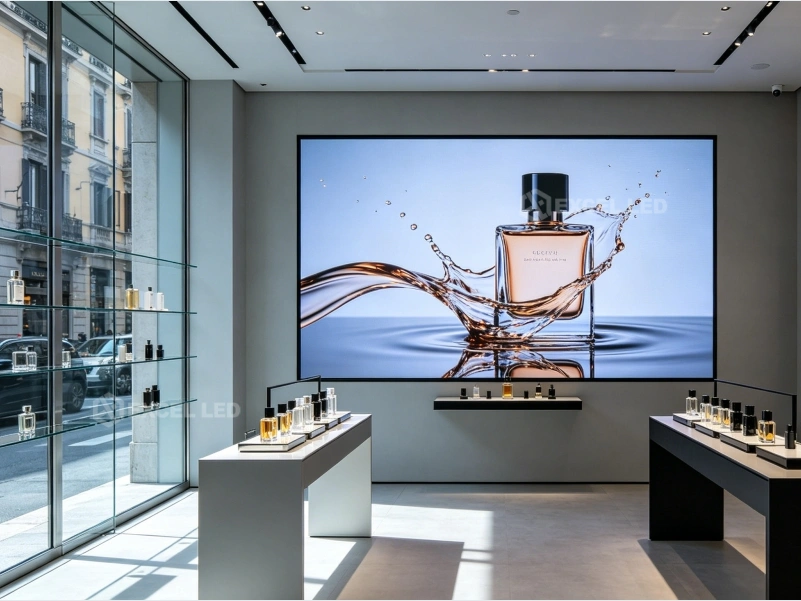
Luxury Retail Store
Location: Milan, Italy
Specs: 45 sqm | P2.5 Ehonor Series
Highlights: This massive P2.5 screen delivers vibrant, high-contrast branding that captures foot traffic and elevates the premium store environment.
Church Sanctuary
Location: Houston, USA
Specs: 72 sqm | P2.5 Ehonor Pro Series (3840Hz)
Highlights: This flicker-free P2.5 wall ensures broadcast-quality sermon backdrops and crystal-clear lyrics for both in-person and online worshippers.
Fortune 500 Corporate Lobby & Hall
Location: Singapore
Specs: 55 sqm | PS Series
Highlights: Standard lobby with displaying real-time data, high-resolution branding, and welcome messages.
Common Questions About P2.5 Indoor LED Display
The “pixelated” look (where you see individual red, green, and blue dots) disappears at approximately 2.5 meters (8.2 feet). If your audience is sitting in a front row closer than 2 meters, they will see the pixel structure. However, for 95% of retail stores, churches, and lobbies where the first row of viewers is at least 3 meters away, P2.5 delivers a perfectly smooth, “high-definition” visual experience that is indistinguishable from much more expensive fine-pitch screens.
Power consumption is a major concern for large-scale P2.5 projects. On average, a P2.5 display consumes 200W to 300W per square meter during normal operation (at 30-50% brightness). For a standard 10sqm screen running 12 hours a day, you can expect an average monthly consumption of around 900 kWh. We recommend high-efficiency PWM driver ICs to keep your electricity bills and heat levels under control.
Most standard indoor P2.5 screens have a brightness of 600 to 800 nits, which is perfect for indoor lighting. However, if your screen faces a glass window with direct sunlight, a standard P2.5 will look “washed out.” In those specific cases, you need to request a high-brightness P2.5 version (1500+ nits). For standard indoor lobbies and sanctuaries without direct sun exposure, the standard 800-nit version is more than sufficient and provides better contrast.
No. The beauty of the P2.5 modular design is its repairability. If a single pixel fails (a “dead lamp”), you can replace just the affected module. With our magnetic front-service tools, a non-technical person can swap a failing module in under 30 seconds. We always provide 2% to 5% spare modules with every order to ensure your screen stays 100% operational for years without needing professional on-site engineering.
This is a common issue with low-cost P2.5 displays using a 1920Hz refresh rate. To the human eye, it looks fine, but a phone camera “sees” the refresh lines. For modern environments like Churches or Retail Stores where people take photos and videos for social media, we only offer a 3840Hz high-refresh rate. This ensures a solid, flicker-free image in every smartphone photo and professional video recording.
Ready to Scale Your Commercial Visual Impact?
EXCEL LED’s P2.5 series is the ultimate “workhorse” for any large-scale commercial environment, offering the best balance of pixel density and project ROI. However, every architectural space is unique. Whether you need a standard 16:9 meeting room setup or a massive 1:1 creative mall display, choosing a professional LED display manufacturer is the key to ensuring long-term reliability and engineering support.
Not sure if P2.5 is the right fit for your specific project? You are always welcome to return to our Indoor LED Display hub to explore our full range of fine-pitch, COB, and rental technologies.
Contact Us Now!
Fill out the form below, and our engineering team will provide you with a customized indoor LED display solution and a competitive quote within 24 hours.
Indoor LED Display Manufacturer Guide
Indoor LED Display Installation Guide
Indoor LED Display Price Guide
How to Choose Indoor LED Display Pixel Pitch
Top 10 indoor LED Display Manufacturers
Indoor LED Display vs LCD Video Wall
Best Pixel Pitch for Conference Room LED Screen
P2.5 Indoor LED Display: The 2.5mm Pixel Pitch Standard for High-Definition Commercial Video Walls
Table of Contents
1. Why is P2.5 Indoor LED the Commercial Standard?
The P2.5 indoor LED display remains the benchmark for large-scale commercial integration. For project managers, selecting P2.5 is a strategic move for budget optimization. In expansive spaces like shopping mall atriums or large church sanctuaries, the audience is far enough away that the visual benefits of expensive sub-2mm screens become invisible.
By choosing a P2.5 indoor LED display, you can deploy a massive, seamless digital canvas without the prohibitive costs of fine-pitch technology. This “sweet spot” allows you to maximize screen size and impact while achieving a faster ROI. The P2.5 standard is about delivering high-brightness clarity that perfectly matches the viewing distance of professional architectural environments.
2. Key Tech Specs for P2.5 Indoor LED Display
Beyond the physical density of 160,000 dots/m², the true performance of a P2.5 indoor LED display is determined by its internal architecture. In 2026, savvy buyers look past the pixel pitch to evaluate how specific components impact long-term operational costs and brand image.
3840Hz Refresh Rate & Social Media Impact
For retail stores and churches, your screen is constantly being photographed and shared on social media. A P2.5 indoor LED display equipped with a high-end PWM driver IC achieves a 3840Hz refresh rate, ensuring the image remains flicker-free on smartphone cameras. Choosing high-refresh technology prevents “scan lines” from ruining viral posts, effectively protecting your brand’s digital reputation and ensuring your marketing content looks professional in every shot.
ROI via Common Cathode Energy Saving
For large-scale projects exceeding 50sqm, electricity is a major ongoing expense. Our P2.5 indoor LED display utilizes advanced Common Cathode technology, which supplies precise voltage to the Red, Green, and Blue chips separately. This reduces heat by 20% and slashes power consumption by up to 30%. For a massive mall installation, these energy savings can recover thousands of dollars in annual utility costs, significantly lowering the Total Cost of Ownership (TCO) over the product’s lifespan.
3. How to Accurately Plan Your P2.5 Indoor LED Screen Size and Viewing Distance?
Properly engineering a P2.5 indoor LED display requires balancing physical space with pixel resolution. To ensure the optimal viewing distance, we follow strict industry standards that align the screen’s density with the audience’s visual acuity.
The 1mm=1m Engineering Rule
The pixel pitch directly dictates the optimal viewing distance. For a P2.5 indoor LED display, the gold standard is the 1mm=1m rule: the visual “sweet spot” begins at 2.5 meters (8.2 feet). At this distance, the individual pixels blur into a seamless, high-definition image. If your front-row audience is closer than 2 meters, you should consider a finer pitch; if the audience is beyond 10 meters, P2.5 ensures maximum impact without overspending on unnecessary resolution.
Achieving Native 1080P & 4K with P2.5
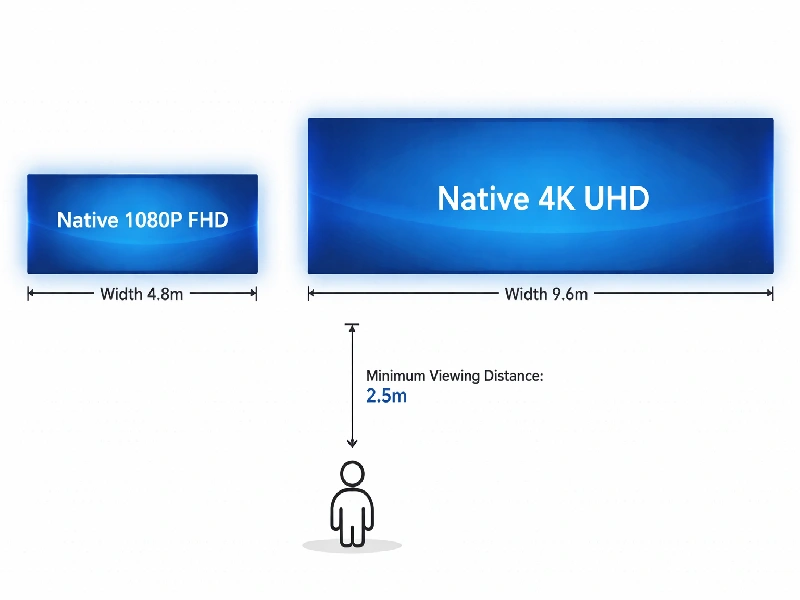
A critical part of your size calculation is matching the screen’s physical dimensions to your content’s 16:9 aspect ratio. To avoid image stretching or “letterboxing,” use these hard-coded engineering benchmarks:
For Native FHD (1920×1080): Your P2.5 indoor LED display must be at least 4.8 meters wide.
For Native 4K UHD (3840×2160): You require a massive digital canvas 9.6 meters wide.
Understanding these formulas prevents unrealistic expectations and ensures your video content maps “point-to-point” for professional-grade clarity in churches, malls, or corporate lobbies.
4. P2.5 vs Other Pixel Pitches: When Should You Save Your Budget or Spend More?
Choosing a P2.5 indoor LED display is a strategic balance between high-definition visual impact and project cost. A professional P2.5 vs P3.0 comparison reveals that while larger pitches are cheaper, they often fail in high-traffic commercial environments. Understanding when to spend more on density and when to save your budget for screen size is the key to a successful AV investment.
P2.5 vs P2.0: Saving 25% on Budget
When performing a P2.0 vs P2.5 analysis for large corporate spaces or churches, the viewing distance is the deciding factor. If your audience is seated 3 meters or further away, the human eye cannot distinguish the additional pixel density of a P2.0 screen. By opting for a P2.5 indoor LED display in these scenarios, you can save approximately 25% on your hardware budget. This allows you to reinvest those savings into a larger screen area or higher-end processing, delivering a much higher total visual impact without over-specifying the technology.
P2.5 vs P3.0: Avoiding Pixelation
In a retail or shopping mall environment, the P2.5 vs P3.0 comparison is about brand integrity. If your display is installed at eye level where customers walk within 2 meters, a P3.0 screen will show a visible “screen-door effect” (visible gaps between pixels), making your content look grainy. The P2.5 indoor LED display provides the necessary 160,000 dots/m² to ensure text and high-fashion imagery remain smooth and professional. Choosing P2.5 over P3.0 for close-up interactions ensures your brand is perceived as premium rather than budget-grade.
5. How to Budget for P2.5 Indoor LED Display Prices in 2026?
When requesting a quote, the P2.5 LED video wall cost is often misunderstood as just the price of the panels. In 2026, a professional budget must account for the entire ecosystem, including the installation price, control systems, and structural frames. Understanding the difference between upfront investment and long-term value is critical for a sustainable AV project.
Breaking Down the P2.5 Project Cost
A comprehensive p2.5 LED video wall cost consists of three primary layers:
Hardware: The LED cabinets, which vary based on lamp type (Gold vs. Copper wire) and driver IC quality.
Control System: Video processors and sending/receiving cards (e.g., NovaStar or Colorlight) required to manage 4K/8K signals.
Infrastructure: The installation price and the specialized steel or aluminum mounting structure, which ensures the wall remains perfectly flat over time.
TCO: Why Quality Saves You Money
The Total Cost of Ownership (TCO) is where high-quality engineering pays off. While budget-grade P2.5 screens use copper-wire LEDs, our premium P2.5 indoor LED display utilizes gold-wire encapsulation and high-efficiency power supplies.
Maintenance Savings: Gold-wire LEDs have significantly lower failure rates, preventing costly on-site repairs and “dead pixel” downtime.
Energy ROI: Premium power units reduce heat and electricity consumption by up to 30%.
Over a 5 to 7-year operational cycle, the savings in electricity and maintenance labor can often exceed the original purchase price of the display, making the high-spec P2.5 indoor LED display the most financially sound choice for churches, malls, and corporate hubs.